Introduction
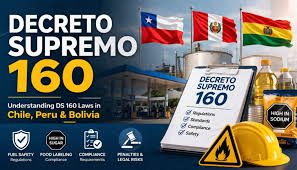
Imagine searching for a law online and finding three completely different explanations. That is exactly what happens with Decreto Supremo 160 – often shortened to DS 160. One source says it is about gas station safety. Another insists it covers black warning labels on soda bottles. A third talks about stopping fuel smuggling in Bolivia. Strangely, all of them are correct.
Here is the simple truth: Decreto Supremo 160 is not one single law. It is a label used by multiple Latin American countries for completely different regulations. Chile alone has two separate DS 160 rules from two different ministries. Bolivia uses the same number for fuel tracking. Peru has applied it to budgets, agency rules, and even emergency declarations.
If you work in trade, logistics, food production, or any regulated industry, mixing these up can cost you time, money, and legal trouble. This guide gives you a clear, simple breakdown of every major DS 160 – and helps you figure out which one applies to you.
What Is a Supreme Decree?
Before looking at each DS 160, let us clarify what a “Supreme Decree” actually is.
In Latin American legal systems, a supreme decree is a rule issued by the executive branch – usually signed by the president and a relevant minister. It carries the full force of law. However, it does not replace laws passed by congress. Instead, it provides the practical, detailed instructions for following those laws.
Think of it this way: a law says “fuel must be handled safely.” A supreme decree tells you exactly how to build the storage tank, how often to inspect it, and what paperwork to keep. Each decree gets a number based on when it was published. That is why DS 160 can appear in different countries for different topics.
Chile’s Two Versions of DS 160
Chile has two active Decreto Supremo 160 regulations, and confusing them could land you in very different trouble.
Fuel Safety Rules – DS 160 of 2008
Chile’s Ministry of Economy issued this decree in 2008. It focuses entirely on preventing fires, leaks, and explosions from liquid fuel operations. The rules apply to gasoline, diesel, kerosene, biodiesel, and bioethanol – from refining all the way to the final sale.
Who must follow it? Any facility storing more than 1,100 liters (about 290 gallons) of liquid fuel must register with Chile’s SEC (Superintendence of Electricity and Fuels) and meet all technical requirements. That includes gas stations, mine fuel depots, airport fueling systems, factory generators, and large logistics yards.
Key requirements include approved tank materials, grounding wires before any fuel transfer, spill containment barriers, and strict bans on phones near fueling zones. The SEC enforces the rules through inspections and can issue fines or shutdowns for violations.
Food Warning Labels – DS 160 of 2012
Chile’s Ministry of Health issued this second DS 160 in 2012 to fight rising obesity and diet‑related diseases. It requires packaged foods and sugary drinks to display black, stop‑sign shaped warning labels on the front of the package if they exceed government limits for calories, sugar, sodium, or saturated fat.
A product can have one to four labels depending on how many nutrients exceed the limits. This regulation became a global model – Mexico, Peru, Israel, and Canada have since adopted similar front‑of‑package warning systems.
Bolivia’s DS 160 – Fuel Sales Oversight
Bolivia uses Decreto Supremo 160 to fight fuel smuggling and tax fraud. Bolivia subsidizes fuel, making it cheaper inside the country than in neighboring nations. That price gap created a black market – people bought subsidized fuel and illegally sold it across the border.
Bolivia’s DS 160 requires electronic invoices for every fuel sale, real‑time inventory reporting through government digital platforms, and special licenses for any business involved in fuel sales. Penalties for violations include heavy fines, temporary shutdowns, or permanent closure. Legitimate fuel companies have welcomed the decree because it reduces unfair competition, but smaller operators have faced higher compliance costs.
Peru’s DS 160 Decrees
Peru has issued multiple DS 160 regulations over the years, each for a different purpose. Examples include:
- DS 160-95-EF – controls for educational benefit funds
- DS 160-2020-PCM – organizational rules for an investment supervisory agency
- DS 160-2021-PCM – extension of a state of emergency in Piura
- DS 160-2022-EF – supplementary budget credits for state companies
The year and issuing ministry tell you which one applies.
Frequently Asked Questions
- What is Decreto Supremo 160 in simple words?
It is an executive regulation used in several Latin American countries. It is not one law – different countries have issued different DS 160 rules for fuel safety, food labeling, tax enforcement, and government organization. - How many versions of DS 160 exist?
At least five major versions. Chile has two (fuel and food). Bolivia has one (fuel sales). Peru has multiple from different years. - Which DS 160 applies to fuel safety in Chile?
That is DS 160 from 2008, issued by the Ministry of Economy. It is enforced by the SEC. - What does Chile’s food labeling DS 160 require?
Black stop‑sign warning labels on the front of any packaged food or drink that exceeds limits for calories, sugar, sodium, or saturated fat. - What is Bolivia’s Decreto Supremo 160 about?
It tightens controls on fuel sales to prevent smuggling and tax evasion – requiring electronic invoices, real‑time reporting, and special licenses. - Who must follow Chile’s fuel safety DS 160?
Any facility storing more than 1,100 liters of liquid fuel – gas stations, mine depots, airport fuel systems, factory generators, and large logistics yards. - Where can I find the official text of a DS 160 decree?
Go to the official government website of the country in question – usually the issuing ministry or the official gazette. - Has Chile’s fuel safety DS 160 been updated recently?
Yes. The most recent update came in September 2025 through a separate decree (DS 26 of the Energy Ministry). - Does Argentina have a Decreto Supremo 160?
No. Argentina uses different legal terminology (Decreto de Necesidad y Urgencia) and has a DNU 160 from 2017, but it is not called a Supreme Decree. - How can I tell which DS 160 applies to my situation?
Check three things: the country, the publication year, and the issuing ministry. Once you have those, you can locate the correct official text.
Conclusion
Decreto Supremo 160 is a reminder that legal research requires precision. The same number on a document can mean very different things depending on where and when it was issued. In Chile, it might be about grounding wires at a gas station or warning labels on a bag of chips. In Bolivia, it could be about invoices for trucked fuel. In Peru, it might relate to university funds or a regional emergency. Always verify the country, year, and ministry before taking any action. And when in doubt, consult a local legal expert. Rules like DS 160 exist to protect people, property, and public health – understanding them correctly is the first step toward compliance and safety.
About The Author