
Introduction
Have you ever walked into a room and instantly felt calm, inspired—or completely overwhelmed? That emotional response often comes down to one powerful factor: interior design styles. The way a space is arranged, colored, and furnished can dramatically shape how we live, work, and relax.
Understanding different interior design styles isn’t just about aesthetics. It’s about creating an environment that reflects your personality, supports your lifestyle, and feels genuinely like home. Whether you love sleek modern minimalism or cozy rustic warmth, knowing your options makes decision-making far easier—and far more enjoyable.
In reality, most homeowners struggle not because they lack taste, but because they don’t understand the defining elements behind each style. This guide will walk you through the most influential styles, their origins, key characteristics, and practical ways to apply them without blowing your budget.


Table of Contents
Table of Contents
- Understanding Interior Design Styles
- Modern Interior Design Style
- Contemporary Interior Design
- Minimalist Interior Design
- Scandinavian Interior Design
- Industrial Interior Design
- Bohemian Interior Design
- Farmhouse Interior Design
- Traditional Interior Design
- Transitional Interior Design
- Luxury and High-End Design
- How to Choose the Right Interior Design Style
- Mixing Interior Design Styles Successfully
- Frequently Asked Questions
- Conclusion
Understanding Interior Design Styles
Interior design styles are structured approaches to decorating and organizing interior spaces. Each style has a recognizable combination of:
- Color palettes
- Furniture shapes and materials
- Lighting approaches
- Textures and finishes
- Architectural influences
Some styles date back centuries, like traditional European-inspired interiors. Others, like industrial loft design, emerged from adaptive reuse of old warehouses in cities like New York during the mid-20th century.
The global interior design industry was valued at over $150 billion in recent years, reflecting how deeply people care about their living spaces. However, trends evolve constantly. That’s why understanding the foundation of interior design styles helps you design timeless spaces rather than chasing fleeting fads.
Modern Interior Design Style
What Defines Modern Style?
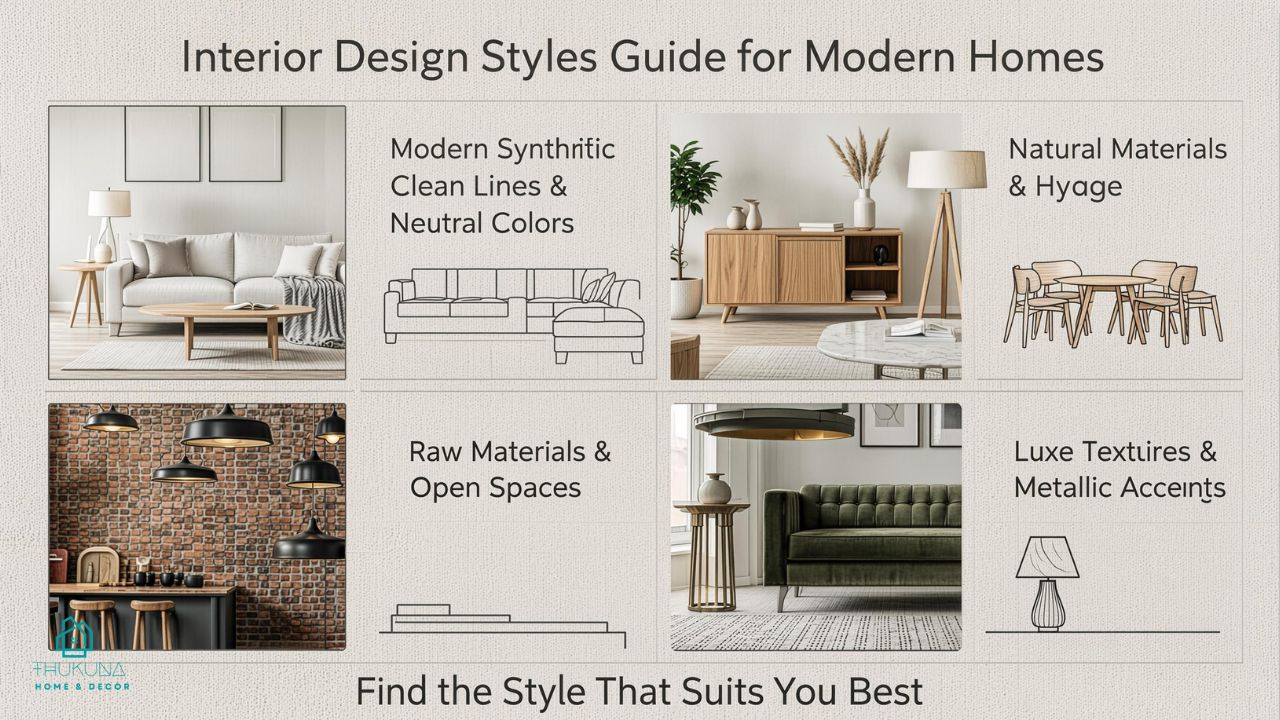
Modern interior design style originated in the early to mid-20th century, influenced by the Bauhaus movement and Scandinavian design principles. It emphasizes:
- Clean lines
- Neutral color palettes
- Functional furniture
- Minimal ornamentation
Think simplicity with purpose.
Key Elements
- Materials: Wood, leather, metal, glass
- Colors: Whites, blacks, earthy tones
- Furniture: Low-profile, sleek silhouettes
- Lighting: Statement pendant lights
Modern interiors feel open and uncluttered. Every object serves a function.
Real-Life Example
Imagine a living room with a low leather sofa, a walnut coffee table, and floor-to-ceiling windows. There are no excessive decorations—just intentional, curated pieces.
Contemporary Interior Design
Many people confuse modern and contemporary design. However, contemporary design reflects current trends, while modern refers to a historical movement.
Features of Contemporary Design
- Open floor plans
- Neutral base with bold accents
- Sculptural furniture
- Mixed materials
On the other hand, contemporary spaces evolve over time. What’s “contemporary” today may not be tomorrow.
Minimalist Interior Design
Minimalism goes beyond aesthetics—it’s a philosophy. It focuses on intentional living and eliminating excess.
Core Principles
- “Less is more”
- Functional layouts
- Neutral tones
- Decluttered surfaces
Minimalist interior design styles are especially popular in urban apartments where space is limited.
Psychological Impact
Research shows clutter can increase cortisol levels, contributing to stress. Minimalist spaces often promote calm and clarity.
Scandinavian Interior Design


Originating in Nordic countries, Scandinavian design blends functionality with warmth.
Signature Characteristics
- Light wood tones
- White walls
- Cozy textiles (wool, linen)
- Natural light emphasis
The concept of “hygge,” a Danish word for cozy comfort, heavily influences this style.
Industrial Interior Design
Inspired by converted factories and warehouses, industrial design celebrates raw materials.
Hallmarks
- Exposed brick walls
- Visible pipes and beams
- Concrete floors
- Metal fixtures
This style feels bold, edgy, and urban.
Bohemian Interior Design
Bohemian (Boho) style is expressive, eclectic, and layered.
Features
- Rich colors
- Patterned textiles
- Vintage furniture
- Plants and global décor
Unlike strict modern aesthetics, Boho invites personality and storytelling.
Farmhouse Interior Design
Farmhouse style evokes comfort and simplicity.
Modern Farmhouse Elements
- Shiplap walls
- Barn doors
- Neutral color palettes
- Rustic wood furniture
It blends country charm with updated sophistication.
Traditional Interior Design
Traditional interiors draw inspiration from 18th and 19th century European décor.
Common Traits
- Symmetry
- Ornate detailing
- Dark wood furniture
- Rich fabrics
This style feels formal and timeless.
Transitional Interior Design
Transitional design combines traditional elegance with modern simplicity.
Why It’s Popular
- Balanced aesthetics
- Neutral palettes
- Comfortable yet refined furnishings
It’s ideal for homeowners who want warmth without heavy ornamentation.
Luxury and High-End Design
Luxury design emphasizes craftsmanship and premium materials.
Distinguishing Features
- Marble surfaces
- Custom cabinetry
- Designer lighting
- Statement art pieces
High-end interior design styles focus on bespoke details and exclusivity.
How to Choose the Right Interior Design Style
Selecting among interior design styles can feel overwhelming. Start by asking:
- How do you want your home to feel?
- What colors naturally attract you?
- Do you prefer simplicity or layered richness?
- What’s your realistic budget?
Practical Steps
- Create a mood board
- Analyze your current furniture
- Consider architectural features
- Start with one room
In reality, your home doesn’t need to follow one strict style. It should reflect you.
Mixing Interior Design Styles Successfully
Blending interior design styles can create unique, personalized spaces.
Tips for Balance
- Stick to a consistent color palette
- Limit competing focal points
- Repeat materials throughout
- Maintain visual harmony
For example, pairing industrial lighting with Scandinavian furniture can create a warm yet edgy look.
FAQ
Frequently Asked Questions
What are the most popular interior design styles today?
Modern, Scandinavian, minimalist, and transitional styles remain highly popular due to their versatility and clean aesthetics.
Can I combine different interior design styles in one home?
Yes. Many designers recommend blending styles to create depth and personality. Just maintain balance.
How do I identify my interior design style?
Look at your saved inspiration images. Patterns will emerge—colors, furniture shapes, textures.
Are interior design styles expensive to implement?
Not necessarily. You can replicate most styles at various budget levels with smart sourcing.
What is the difference between modern and contemporary design?
Modern refers to a historical design movement; contemporary reflects current trends.
Do interior design styles affect home value?
Well-designed interiors can increase perceived value and buyer appeal.
Is hiring an interior designer necessary?
It depends on your budget and project scope. Many homeowners successfully DIY with proper research.
How often do interior design styles change?
Major shifts happen every decade, but foundational styles remain consistent.
Conclusion
Understanding interior design styles empowers you to create a home that feels authentic and intentional. Whether you lean toward clean minimalism, rustic farmhouse warmth, or bold industrial charm, the key is alignment with your lifestyle and emotional needs.
Design isn’t just decoration—it’s how you experience daily life. When your surroundings reflect who you are, your home becomes more than a space. It becomes a story.